Posts

Showing posts with the label Hindu Religion

Char Dham

Image
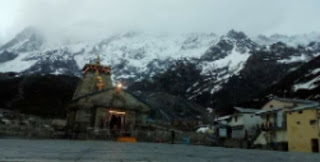
Char Dham The Char Dham comprises Badrinath, Dwaraka, Puri and Rameswaram a set of four pilgrimage places in India. Hindus believe that visiting these pilgrimage e places helps achieve "Moksha" (salvation). Adi Shankaracharya defined the four Hindu pilgrimage Badrinath, Dwaraka, Puri and Rameswaram places as Char Dham. According to the Hindus customs every Hindu must visit the Char Dhams in one's lifetime. There is another small Char Dham circuit in Uttarakhand -   Yamunotri, Gangotri, Kedarnath, and Badrinath. These Chota Char Dham are closed in winter due to snowfall and open again for pilgrims with the starting of summer. Historical Description The four Shankaracharya Peeth (Seats) at the Chaar Dham created four Hindu monastic institutions. He organized four Hindu Maṭhas at Dvaraka Math ( मठ ) in the West,   Sringeri Sharada Peetham Math in the South, Jagannatha Puri Math in the East and Badrikashrama Math in the North. The First Dham , Badrinath became pr...

Rameswaram

Image
Rameswaram Rameswaram is a town in the Ramanathapuram district in Tamil Nadu, India. It is on Pamban Island which is separated from mainland India and is around 40 kilometres away from Mannar Island which is in Sri Lanka. Pamban Island is also known as Rameswaram Island. It is connected to mainland of India by the Pamban Bridge. it is considered to be one of the religious spot to Hindus and part of the Char Dham pilgrimage. According to tradition, God Ram made a bridge from Rameshwaram to Sri Lanka to save his wife Sita from the demon king Ravan. Hindus trust that visiting all the Char Dham will help them to get moksha (liberation from rebirth). The Ramanathaswamy Temple is in the center of the town. It is dedicated to God Shiv and is closely connected with Ram. The temple and the town are considered a holy pilgrimage site one of the Char Dham. History Rameswaram means Lord of Ram, the presiding deity of the Ramanathaswamy Temple. According to Ramayan, Ram (seventh avata...

Ramayan

Ramayan  ( रामायण ) Sri Ram or Ramchander is the seventh avatar of Vishnu. The original Ramayan written by the 4th c. sage Valmiki comprised of seven ‘kands’.   Bal Kand:   It has the Youth, the childhood and teenage years of Ram.   Ayodhya Kand:  It has the court of Dasarath, including the dialogues between Dasarath and Kaikeyi and the exile of Ram.                Aranya Kand: It has the Forest life during the 14 years exile period and the abduction of Sita by Ravan.   Kishkindhya Kand:  It has Ram’s residence in Kishkindhya, the search for Sita and the slaying of Bali.   Sundar Kand: It shows the Beautiful (Hanuman), sundar means lovely, description of the Places over which Ram wanders, and the arrival of Ram with his allies in Lanka.   Yuddh Kand: It has the War, the victory over Ravan, the return to Ayodhya and the coronation of Ram ...